
Showing posts with label Philippine cuisine. Show all posts
Showing posts with label Philippine cuisine. Show all posts
Thursday, November 29, 2012
Sibuyas (Onion)
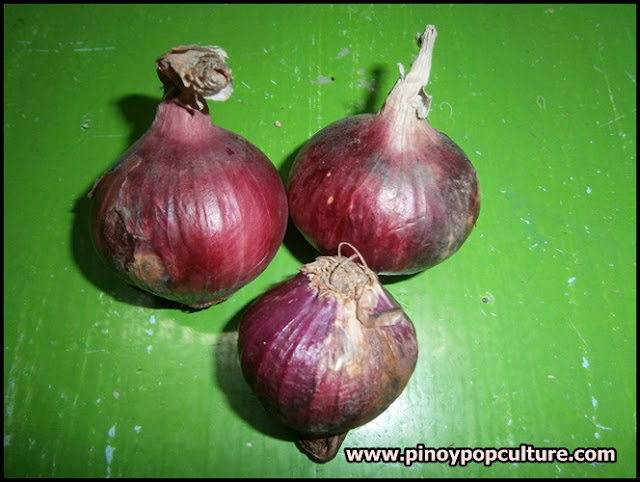
Sibuyas (onion) is one of the plants mentioned in the Tagalog folk song Bahay Kubo. Scientifically known as Allium cepa, the sibuyas is a common ingredient in Philippine cuisine. The bulbs are chopped for sautéed dishes, while the young onion plants (sibuyas na mura) impart a mild, pleasantly pungent taste to food.

Sunday, November 25, 2012
Luya (Ginger)
Luya (ginger) is one of the plants mentioned in the Tagalog folk song Bahay Kubo. Scientifically known as Zingiber officinale, the rhizome of luya is a spice that figures highly in Philippine cuisine. Aside from being used in tinola (chicken broth with papaya and chilli leaves), luya helps in removing the fishy smell of seafood. Following is a picture of some luya rhizomes we bought at the market. The price tag: twenty pesos per kilogram.


Tuesday, November 13, 2012
Bawang (Garlic)
Bawang (garlic) is one of the plants mentioned in the Tagalog folk song Bahay Kubo. Scientifically known as Allium sativum, the bulb of bawang is a spice commonly used in Philippine cuisine. Research has shown that bawang has antibacterial, antibacterial, and antifungal activity as medicine. In Philippine folklore, bawang is said to ward off the aswang, a vampire-like creature.
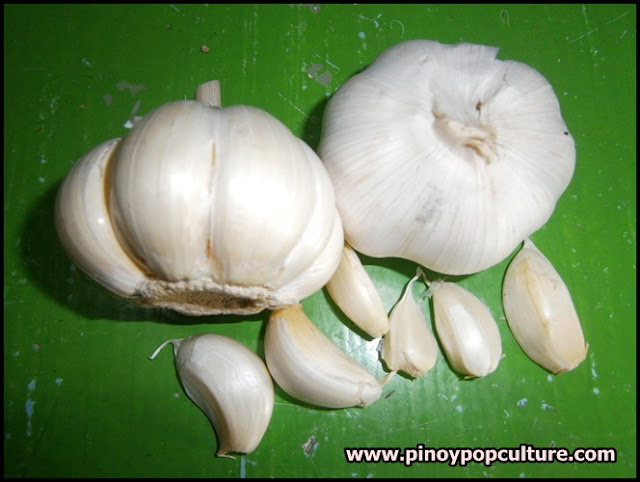
Following is a picture of bawang bulbs and cloves we bought at the market. The price tag: sixty pesos per kilogram.
Following is a picture of bawang bulbs and cloves we bought at the market. The price tag: sixty pesos per kilogram.

Subscribe to:
Posts (Atom)